
01 — The institution
An independent certification authority for artificial intelligence.
It operates on the institutional logic of bodies like the Forest Stewardship Council, B Lab, and Fair Trade: written standards, independent assessors, a public registry, and binding review.
Ethicality exists to be that institution — not a consultancy, not a trade association. A certification authority for the ethical use of AI.
02 — The board's role
The expert layer that makes the mark credible.
The board is Ethicality's decision-making body on certification. Board members review certification assessments, set and update the EUMS standard annually, and hold binding authority over whether a Blue Badge is issued. This is not a ceremonial governance role — board members are the expert layer that makes the mark credible.
Expected commitment: four formal meetings per year (two in person, two remote), plus certification review work on a rolling basis. Budget twelve to fifteen days per year, with more during the institution's first year.
Specific responsibilities:
- Setting and annually updating the EUMS standard.
- Reviewing certification assessments and approving or denying the Blue Badge in contested or complex cases.
- Appointing the independent ethics review panel.
- Maintaining the integrity and public credibility of the mark.
03 — Who we are looking for
Five profiles. One credible board.
The founding board needs to be credible to standards bodies, to enterprises, and to the public from day one. That requires a specific composition, not a generic one.
- 01Governance experience
A senior figure with direct experience inside a statutory standards body, ministry, or standards body — someone who understands how rules become enforceable and how a credential earns recognition with the institutions that matter.
- 02Enterprise technology leadership
A CTO, CISO, or chief data officer from a regulated enterprise — financial services, healthcare, telecoms, public infrastructure — who has had to make consequential AI decisions inside an organisation that cannot afford to get them wrong.
- 03Ethics or civil society voice
A scholar or civil society leader with public standing on the ethical and social consequences of AI, capable of holding the institution to its stated purpose when commercial pressure pushes the other way.
- 04Legal or governance expertise
A senior lawyer, general counsel, or governance specialist with experience in corporate or governance law — someone who can stress-test the standards and the institution's own governance against the obligations it intends to certify against.
- 05International perspective
At least one member based outside Canada — ideally with direct working experience in the EU, UK, or US AI policy environments — so the institution is not provincial in its outlook from the day it opens.
04 — Why now
Joining at inception is a different role than joining later.
Most board invitations are an invitation to steward something that already exists — to protect a charter that was written by people now gone, against pressures someone else first defined.
The founding board of a certification authority writes the rulebook. It decides what the standards say, what evidence counts, who sits on the ethics review panel, and what the institution will and will not certify. The shape it gives the institution at inception is the shape the institution carries for decades.
The closer analogy is joining a standards body when it is being created, rather than fifteen years in. Once the rulebook is written, governance becomes administration. Before it is, it is authorship. We are still in the period where it is authorship.
05 — The founder
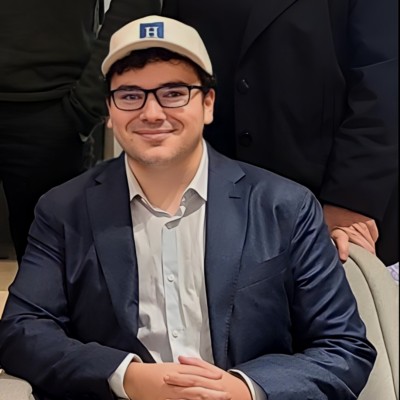
Aiden Muscovitch founded Ethicality in 2026. He studies Ethics, Society and Law at the University of Toronto.
His background is in the Canadian institutions that shape public policy and public discourse. He has worked at the Munk Debates — Canada's foremost public affairs forum — at The Hub, where he served as Assistant Editor and wrote the organisation's weekly polling analysis, and on Parliament Hill as the communications lead to the Honourable MP Michael Chong, the Shadow Minister for Foreign Affairs. He has also held positions at the Institute for Liberal Studies and contributed election analysis during the 2025 federal campaign.
The through-line across that work is a sustained engagement with how institutions earn public trust — and what happens when they fail to. Ethicality is the application of that question to artificial intelligence.
06 — Next step